MIRU-VNTR – Mycobacterium Tuberculosis typing solutions
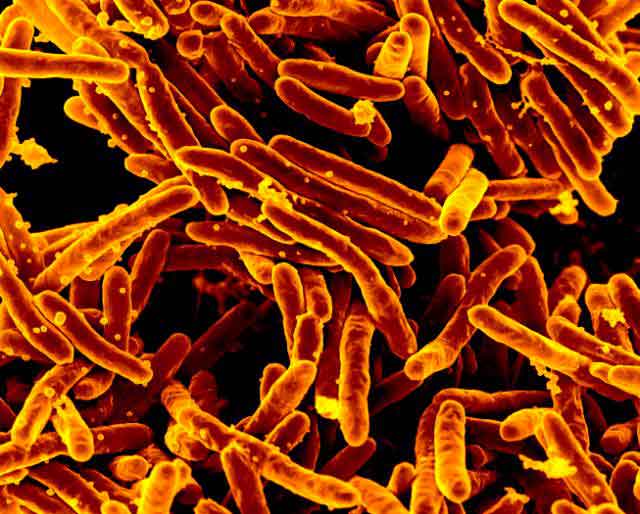
GenoScreen’s MIRU-VNTR typing solution is used by many healthcare centers, CNR and research teams worldwide, both as kits and as service.
MIRU-VNTR, a global reference
The MIRU-VNTR typing
The MIRU-VNTR (Mycobacterial Identification Repetitiv Unit-VNTR) analysis is an MLVA (Multiple Loci VNTR Analysis) analysis scheme specific to Mycobacterium tuberculosis. This is used in the genotyping of strains by numbering copies of VNTR present in 24 identified loci. The targeted VNTR loci are amplified by PCR with a set of primers specific for the flanking regions of each locus. The fragments thus obtained are processed by capillary electrophoresis. This method is the world standard for Mycobacterium tuberculosis typing, adopted by American and European CDCs and reference centers in more than 30 countries.
GenoScreen’s MIRU-VNTR solution became the international standard reference for the MIRU-VNTR method (tests performed by RIVM 3, 4). It comes in a range of exclusive kits adapted to each step of the MIRU analysis (Calibration, validation and typing). This complete solution is optimized to deliver the best possible results with a standardized approach, while maintaining high reproducibility.
Learn more about our MIRU-VNTR kits
MIRU-VNTR Hypervariable, a scheme adapted to the strains of the Beijing lineage
M. tuberculosis strains identified as belonging to the so-called “Beijing” lineage cannot be distinguished by using the standard 24 loci. The sub-lineages in this family are identified by a MIRU analysis using a set of 4 additional hypervariables VNTR loci 1, 2. The MIRU-VNTR Hypervariable kit from GenoScreen enables this additional targeted analysis to be carried out.
GenoScreen’s MIRU-VNTR solution is also available in a range specially designed for this complementary targeted analysis. The MIRU-VNTR Hypervariable kits (calibration, validation and typing) allow this specific typing, while benefiting from the same results quality and reproducibility as our MIRU-VNTR solution.
Learn more about our MIRU-VNTR Hypervariable kits
GenoScreen’s expertise
With its cutting-edge technological expertise, GenoScreen is currently the leader worldwide in the genotyping and tracing of the Mycobacterium tuberculosis complex strains, the agent responsible for tuberculosis.
As kit or service packages, our solutions can be adapted to all issues:
- Research: structure of the strain population, evolution, comparison of virulence properties
- Public health: tuberculosis control and epidemiological surveillance
- Clinical trials: distinction between relapse and exogenous infection in case of treatment failure
- Clinical management: detection of cross-contamination, discrimination of close-related strains (clonal complexity)
The MIRU range, a complete offer
We propose kits and training for the implementation and use of the MIRU-VNTR method on Applied Biosystems® sequencers.

Calibration kit
Calibration of the analysis software and capillary sequencer is an essential preliminary step in the use of the GenoScreen MIRU-VNTR kit. We recommend a calibration of each sequencer and at each capillary change.
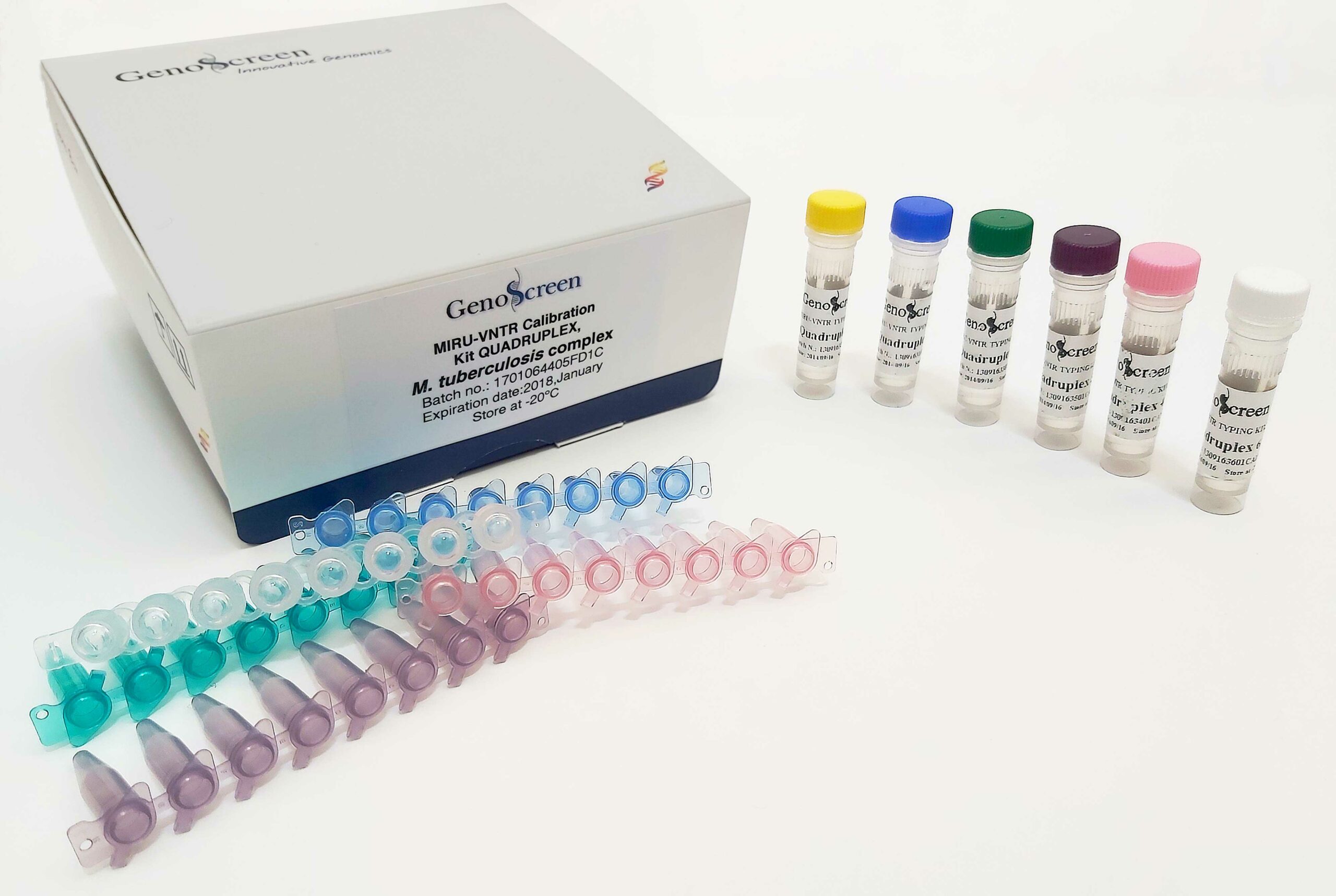
The MIRU-VNTR calibration kit contains: 14 reference DNA, 1 positive control (BCG), 6 master mixes (for the 24 VNTR loci), and an allelic ladder.
It provides calibration of one Applied Biosystems® 3730, 3500, 3100 or 3130 capillary sequencer.
The validation kit
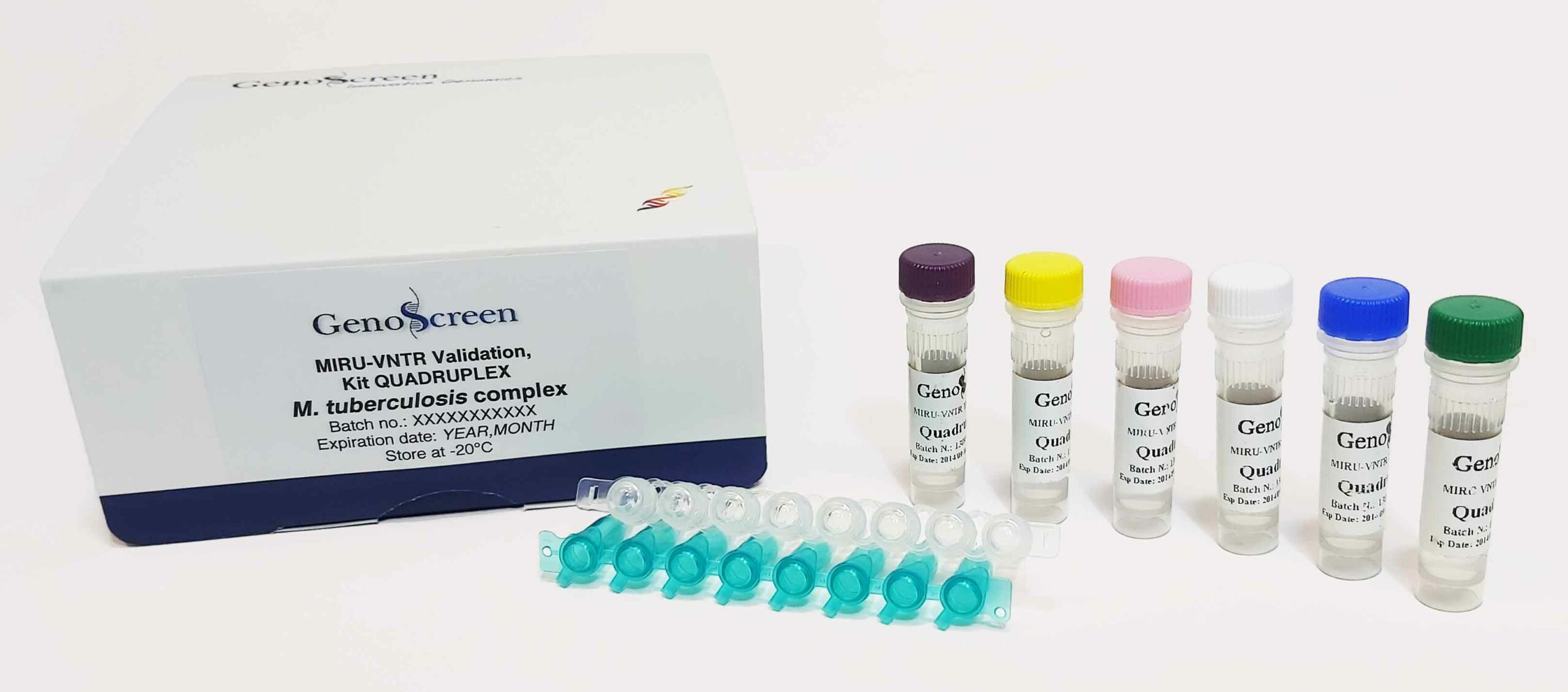
The validation kit is used to validate the sequencer and software calibration over time. It is part of the quality control of the equipment.
The MIRU-VNTR validation kit contains: 14 reference DNA, 1 positive control (BCG) and 6 master mixes (for the 24 VNTR loci).
It provides the ability to validate the calibration of one Applied Biosystems® 3730, 3500, 3100 or 3130 capillary sequencer.
The 24 loci typing kit
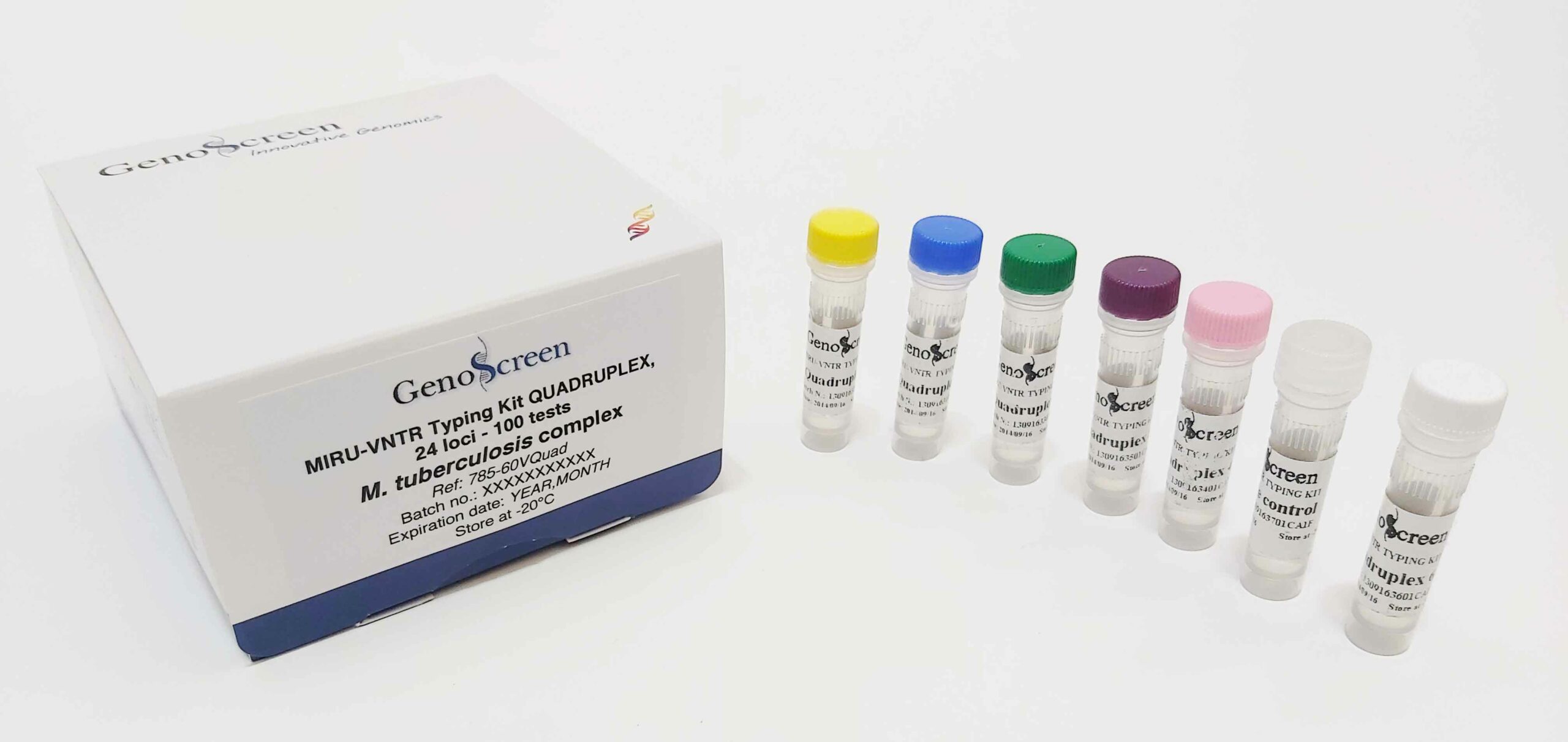
The MIRU-VNTR typing kits contain the reagents necessary to perform MIRU typing on 24 VNTR loci, in accordance with the international standard. This kit allows analysis with a small amount of DNA and ensures a high rate of reproducibility of results.
The kit contains: a positive control (BCG) and 6 master mixes allowing the amplification of the 24 targeted VNTR loci.
It allows to run 100 tests on a previously calibrated Applied Biosystems® 3730, 3500, 3100 or 3130 capillary sequencer.
List of VNTR loci targeted by MIRU-VNTR 24-loci typing

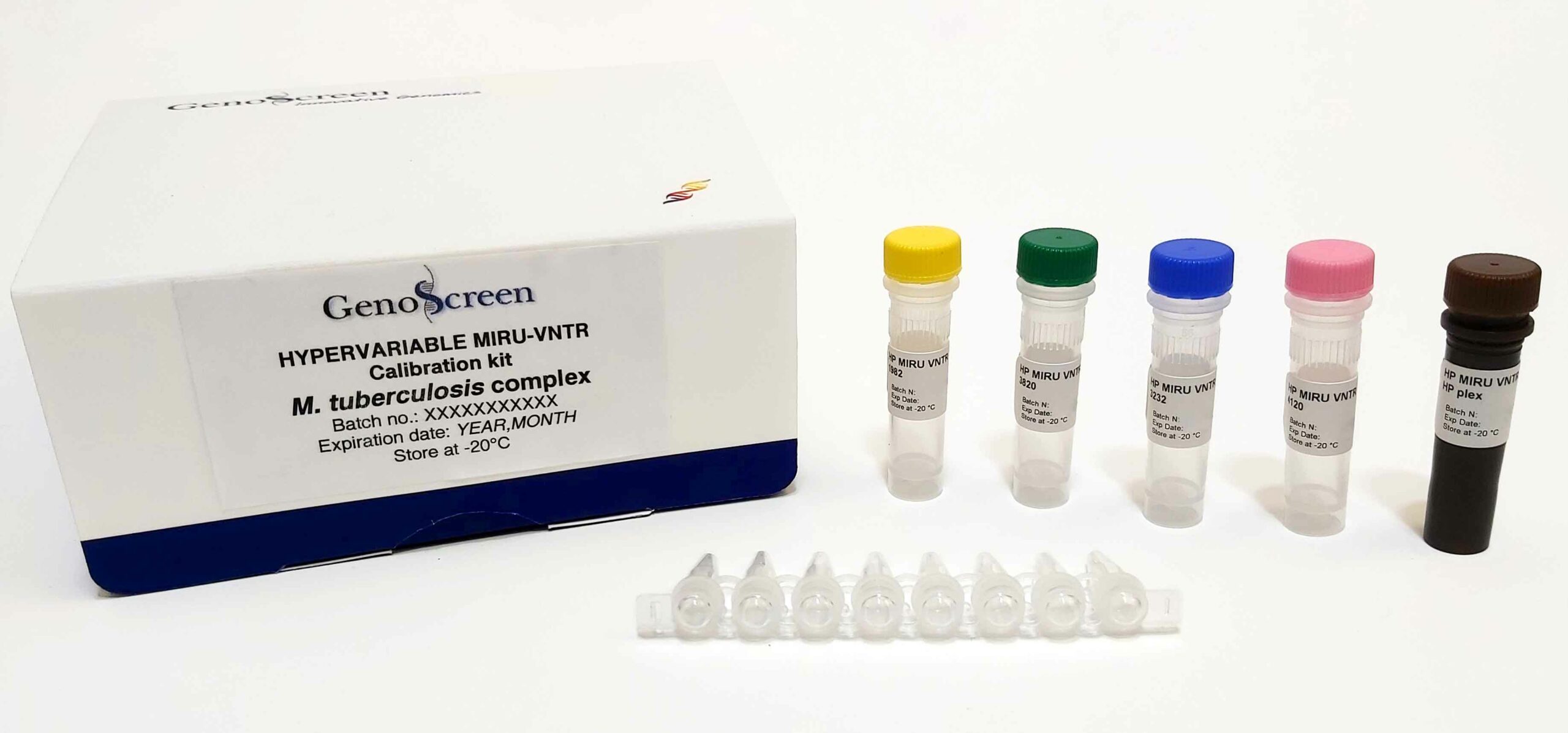
The hypervariable calibration kit
Calibration of the analysis software and capillary sequencer is an essential preliminary step in the use of the GenoScreen MIRU-VNTR Hypervariable kit. We recommend a calibration of each sequencer and at each capillary change.
The MIRU-VNTR Hypervariable calibration kit contains: 6 reference DNA, 1 positive control (BCG), 1 master mix (for the 4 loci), and an allelic scale (ladder).
It provides calibration of one Applied Biosystems® 3730, 3500, 3100 or 3130 capillary sequencer.
The hypervariable validation kit
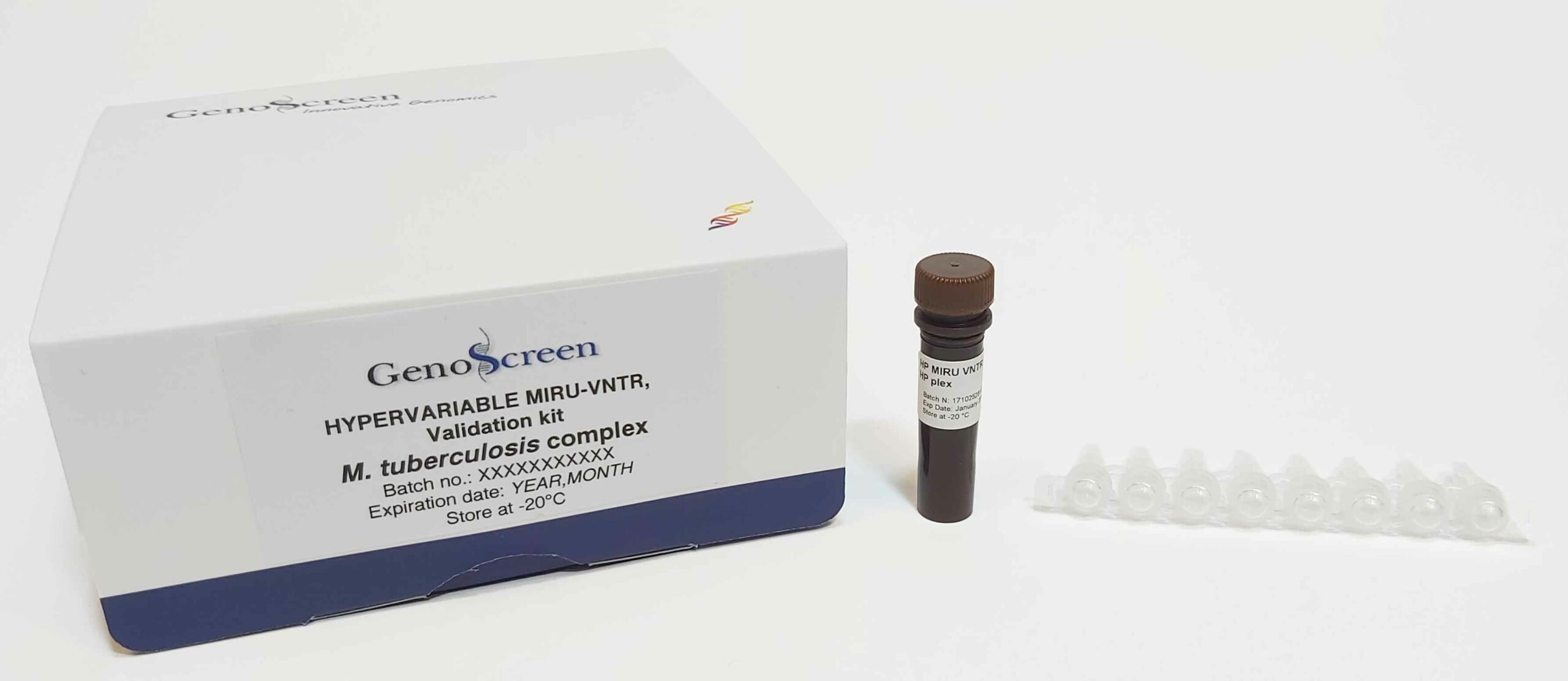
The validation kit allows to validate the sequencer and software calibration over time. It is part of the quality control of the equipment.
The MIRU-VNTR Hypervariable validation kit contains: 6 reference DNA, 1 positive control (BCG), and 1 master mix (for the 4 loci).
It provides the ability to validate the calibration of an Applied Biosystems® 3730, 3500, 3100 or 3130 capillary sequencer.
The hypervariable typing kit
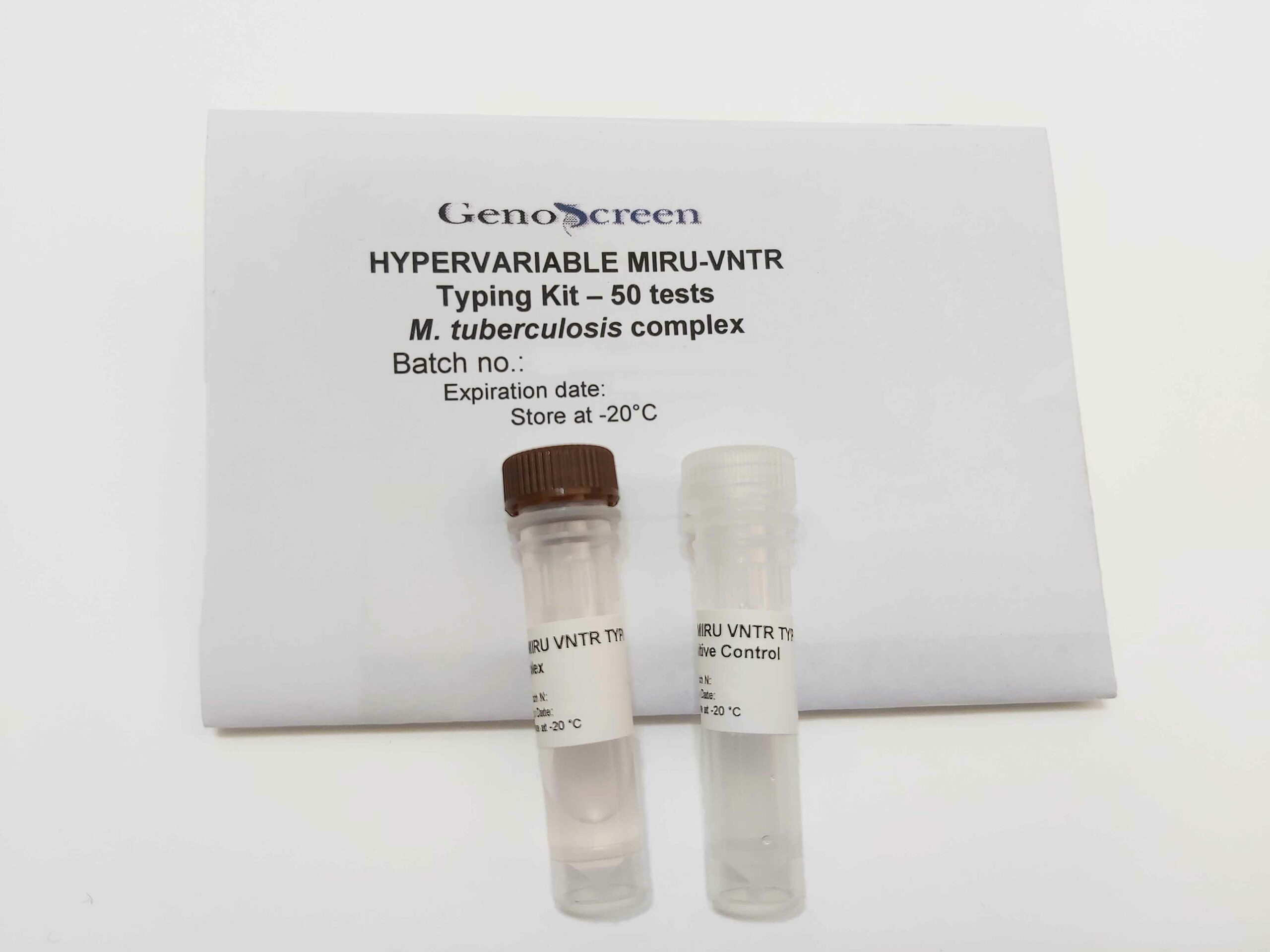
The hypervariable MIRU-VNTR typing kit contains the reagents required to achieve MIRU typing on the additional 4 VNTR loci for differentiating Beijing sublines from each other. This kit allows accurate analysis with a small amount of DNA and ensures a high rate of reproducibility.
The kit contains: a positive control (BCG) and the master mix allowing the amplification of the 4 targeted VNTR loci.
It allows to run 50 tests on a previously calibrated Applied Biosystems® 3730, 3500, 3100 or 3130 capillary sequencer.
List of VNTR loci targeted by MIRU-VNTR Hypervariable typing 3, 4 :
Service provision
We also perform standard and customized MIRU-VNTR analyses as a service provider. We perform MIRU analyses on 9, 12, 15 or 24 standard VNTR markers and/or on the 4 loci dedicated to the Beijing lineage.
Available from 50 ng of extracted DNA (5 μL to 10 ng/µL) or 50 µL of thermolysate, our services include:
- PCR(s) realization ( according to the selected markers)
- PCR product migration on capillary sequencer
- Data analysis on GeneMapper
- Lineage assignment using the MIRU-VNTRplus database
Our training courses
GenoScreen created a complete training program dedicated to the MIRU-VNTR method. From the methodology to the results analysis, including the kits use and the sequencer calibration, these trainings will enable you to easily implement and/or perform the MIRU-VNTR analysis on a routine basis in your laboratory.
MIRU-VNTR training course :
- Theoretical aspects: the premise of the MIRU-VNTR typing method
- Practical aspects: training in the MIRU-VNTR kits use
- Implementation: training in the Applied Biosystems® sequencer calibration
- Data import & analysis: training in the GeneMapper® software use
- Data mining: training in the MIRU-VNTRplus analysis tool use
Références
1 Allix-Béguec C, Wahl C, Hanekom M, Nikolayevskyy V, Drobniewski F, Maeda S, Campos-Herrero I, Mokrousov I, Niemann S, Kontsevaya I, Rastogi N, Samper S, Sng LH, Warren RM, Supply P. Proposal of a consensus set of hypervariable mycobacterial interspersed repetitive-unit-variable-number tandem-repeat loci for subtyping of Mycobacterium tuberculosis Beijing isolates. J Clin Microbiol. 2014 Jan;52(1):164-72.
2 Trovato A, Tafaj S, Battaglia S, Alagna R, Bardhi D, Kapisyzi P, Bala S, Haldeda M, Borroni E, Hafizi H, Cirillo DM. Implementation of a Consensus Set of Hypervariable Mycobacterial Interspersed Repetitive-Unit-Variable-Number Tandem-Repeat Loci in Mycobacterium tuberculosis. Molecular Epidemiology. J Clin Microbiol. 2016 Feb;54(2):478-82.
3 de Beer JL, Kremer K, Ködmön C, Supply P, van Soolingen D; Global Network for the Molecular Surveillance of Tuberculosis 2009. First worldwide proficiency study on variable-number tandem-repeat typing of Mycobacterium tuberculosis complex strains. J Clin Microbiol., 2012 Mar;50(3):662-9
4 de Beer JL, Ködmön C, van Ingen J, Supply P, van Soolingen D; Global Network for Molecular Surveillance of Tuberculosis 2010. Second worldwide proficiency study on variable number of tandem repeats typing of Mycobacterium tuberculosis complex. Int J Tuberc Lung Dis., 2014 May;18(5):594-600
Genome comparisons and mutation detection
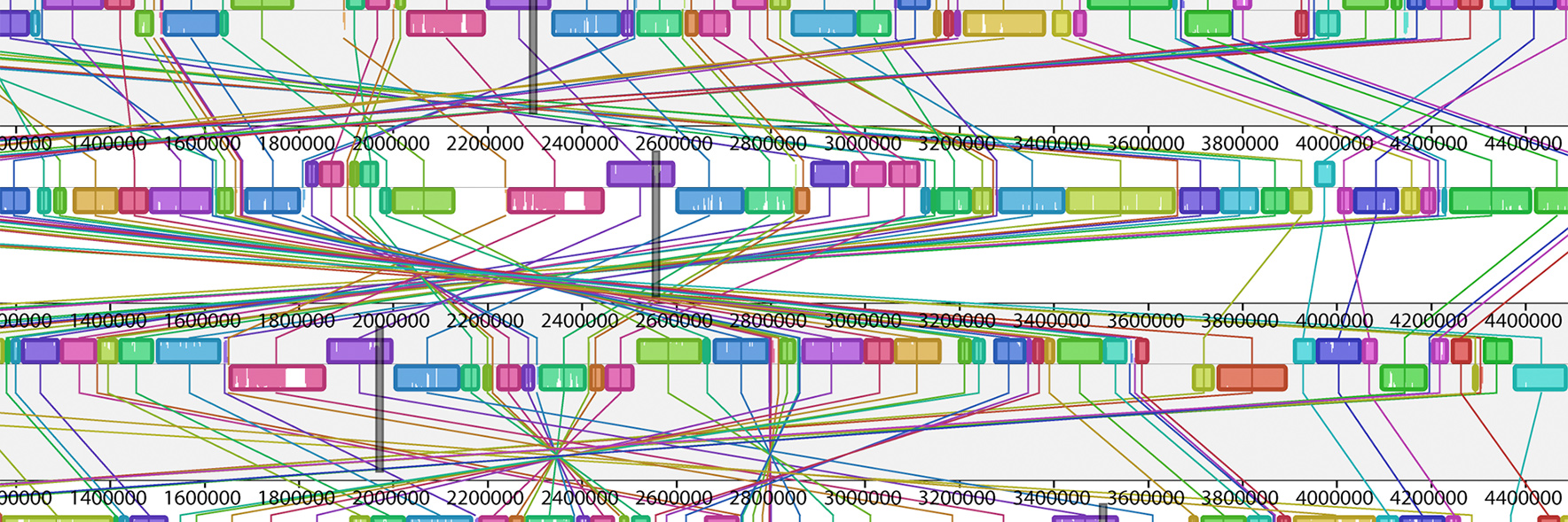
One of the biggest challenges in genomics is being able to connect a phenotype to the available genetic information. Mutation detection and whole-genome comparison techniques can go beyond the simple observation of a genome, in order to make an evolution in your researches. Applications of genome comparison and mutation detection Whole-genome comparisons and mutation detection […]
MLST/MLVA, microbial typing/tracing solutions

GenoScreen proposes you the opportunity to characterize more accurately your microorganisms (subspecies or strain characterization) using standardized and validated molecular biology methods such as MLST or MLVA (including MIRU-VNTR). MultiLocus Sequencing Typing (MLST) The MLST by GenoScreen GenoScreen’s MLST service offer is a complete package of services realized from extracted DNA or thermolysate. This includes […]
Deeplex® Myc-TB – A new Mycobacterium tuberculosis drug resistance prediction assay

Deeplex® Myc-TB is an all-in-one test for species-level identification, genotyping and prediction of antibiotic resistance in Mycobacterium tuberculosis complex strains. As the first ever tool to exploit in-depth DNA sequencing technology and thus detect and analyze antibiotic resistance, Deeplex® Myc-TB detects mutations responsible of antituberculosis drugs resistance.
A rapid and precise characterization
Based on next-generation sequencing, Deeplex® Myc-TB includes a targeted amplification kit that can be used directly on clinical samples, with no need for a culture step, in less than 48 hours.
Deeplex® Myc-TB also provides typing information on the strain involved which is useful for epidemiological surveillance and facilitates the identification of other bacterial pathogens from the same genus.
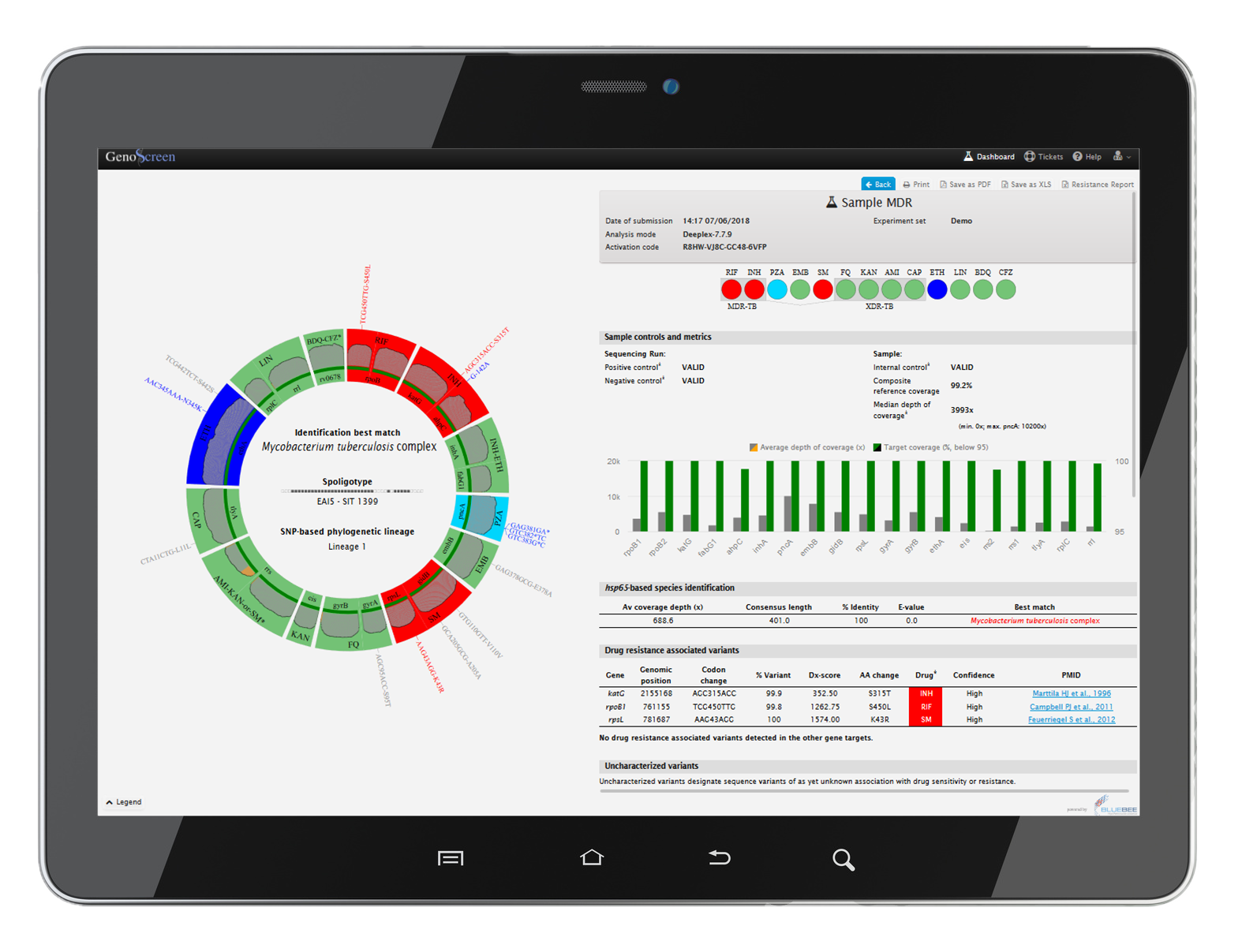
Deeplex® Myc-TB also includes an easy-to-use web application (hosted on a secure cloud digital platform) for the analysis and rapid interpretation of the results.
Genoscreen also commercializes other exclusive kits and services worldwide for the identification and typing of tuberculosis strains via the internationally standardized MIRU-VNTR. These solutions are used in epidemiological surveillance and for the detection of tuberculosis epidemics or other events (such as patient reinfections and laboratory contaminations). They are backed up by high-precision genome analysis services.

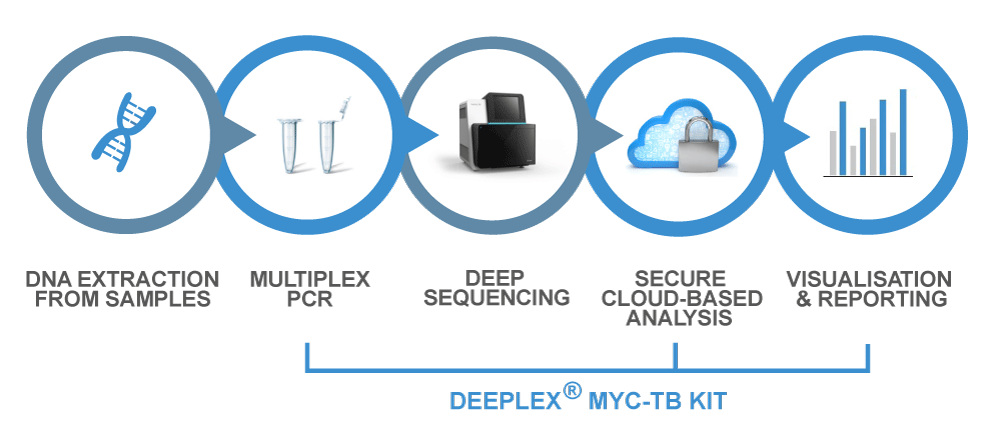
Deeplex® Myc-TB Workflow
- Directly applicable to clinical samples
- Simultaneous prediction of resistance to 15 anti-TB drugs
- MTBC hetero-resistance down to 3%
- MTBC spoligotyping and genotyping
- Identification of more than 100 mycobacterial species (NTM)
- Quick turnaround time of about 48 hours
- Multiplexing of up to 384 samples
Download the technical note:
Deeplex® is registered as a trademark in the USA (number 4980234) and in other countries.
The design of the visualization of the results in the Deeplex® web application is registered in the USA (number 890,770) and in other countries.
Training courses – Genomics technologies

Discover our training courses specifically designed for researchers, biologists and doctors. These courses give you all the keys to mastering the latest genomic analysis tools: a major asset for speeding up your research. Expertise in genomic technologies is now essential for high-quality life science research.These technologies are still evolving very rapidly and therefore require in-depth, […]
Bioinformatics – Giving a clear answer to your research questions

GenoScreen develops a broad range of bioinformatics services – notably those designed to help interpret data generated by NGS. Our algorithms provide clear, precise answers to all types of genome-related issues. Exclusive tools for interpretation and analysis Our bioinformatics services are permanently powered by the results of our R&D programs. GenoScreen detains tools for post-processing […]
SNP genotyping

This technique is based on the variation of a single nucleotide at a given position (Single Nucleotide Polymorphisms), which can lead to functional changes in the genes and proteins resulting from the modified amino acid sequence. By offering genome-wide analysis, GenoScreen can help you identify unknown genotype-phenotype associations or genetic variations that are already known. […]
SSR microsatellite genotyping
This technique is based on the amplification of short DNA sequences composed of repeating units of a few nucleotides. Because of their polymorphism, microsatellite markers can be used to study genetic diversity within a species or population. GenoScreen has developed almost 20 years of expertise in the study and analysis of microsatellites, enabling the development […]
Molecular barcoding

Molecular barcoding (DNA barcoding) is a molecular taxonomy technique used to identify and genetically characterise a sample from a ubiquitous gene, generally belonging to the ribosomal, mitochondrial or chloroplast genome (COI, 16S, rbcL, etc.). DNA barcoding applications DNA barcoding can be used to: Identification by DNA barcoding GenoScreen offers a complete molecular barcoding service and […]
Identifying and genotyping
The identification and genotyping are essential in the discovery of genetics variations, specially in the studies of the populations and pathologies.